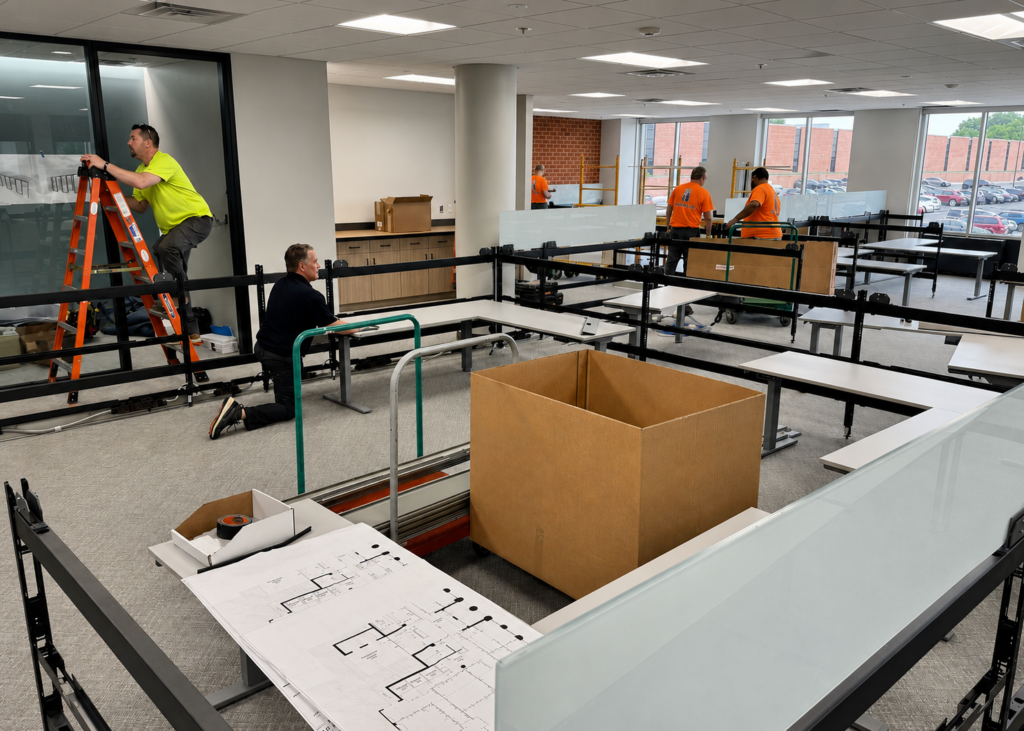
When a project requires union installation, it’s about much more than checking a box on a specification sheet. For project managers, furniture dealerships, architects, and general contractors, understanding what union labor means can help set expectations for scheduling, coordination, and jobsite compliance.
At RDI, we provide both union and non-union installation crews, allowing us to match the right workforce to each project’s requirements. Knowing the difference helps ensure your project is staffed appropriately from day one.
What Is a Union Installer?
In commercial furniture installation and architectural wall installation, union installers are typically members of a regional Carpenter’s Union. In Missouri and Illinois, that includes the Mid-America Carpenters Regional Council.
To become a union member, installers generally must:
- Be sponsored by a participating employer
- Complete extensive on-the-job training
- Pass required drug screenings
- Attend classroom instruction
- Continue progressing through a structured apprenticeship program
Unlike informal training programs that vary by employer, union training follows established standards designed to prepare installers for a wide variety of commercial projects.
Understanding the Apprenticeship Process
Union carpenters complete a structured apprenticeship before earning journeyman status. While the exact program may vary, apprentices typically progress through multiple levels of training that include both classroom education and supervised field experience.
Throughout the program, apprentices:
- Gain hands-on experience on active jobsites
- Complete required classroom instruction
- Demonstrate competency through evaluations
- Learn industry safety standards and installation best practices
Once the apprenticeship is complete, installers become journeymen, signifying they’ve met the program’s training requirements.
Why Union Labor Matters on Commercial Projects
The biggest advantage of union labor isn’t simply union membership. It’s the consistency that comes from standardized training and clearly defined work practices.
For commercial installation projects, that often means:
- Consistent installation procedures
- Standardized safety expectations
- Defined labor classifications
- Efficient coordination with other union trades
- Compliance with project specifications requiring union labor
This structured approach helps reduce uncertainty on projects where multiple contractors and trades are working together.
When Is Union Installation Required?
Not every project requires union labor, but many do.
Union crews are commonly requested when:
- The project is located on an active construction site
- The owner or general contractor specifies union labor
- Coordination with other union trades is required
- Project labor agreements or contract requirements dictate union participation
Understanding these requirements early helps prevent scheduling delays and staffing challenges later in the project.
RDI Offers Both Union and Non-Union Installation
Every project is different. Some projects require union labor, while others are better suited for non-union crews based on budget, location, scheduling, or client preferences.
Because RDI offers both union and non-union installation teams, we can provide the right labor solution based on your project’s specific requirements rather than taking a one-size-fits-all approach.
Whether you’re furnishing a corporate headquarters, healthcare facility, educational campus, or installing architectural wall systems, our experienced project managers will recommend the workforce best suited for your job.
Ready to Plan Your Next Commercial Installation?
If you’re unsure whether your project requires union labor, our team can help you understand the requirements and recommend the best installation strategy before work begins.