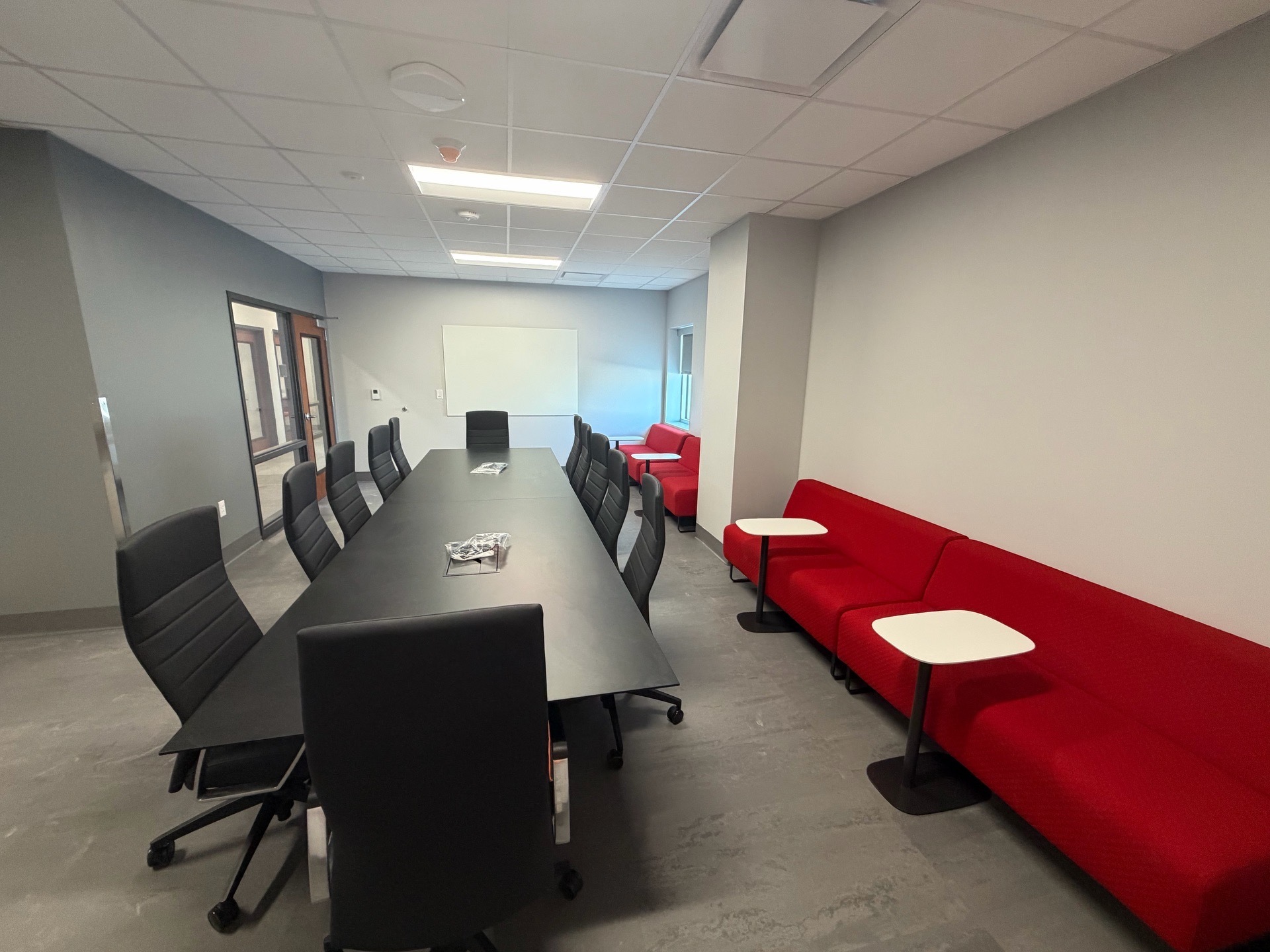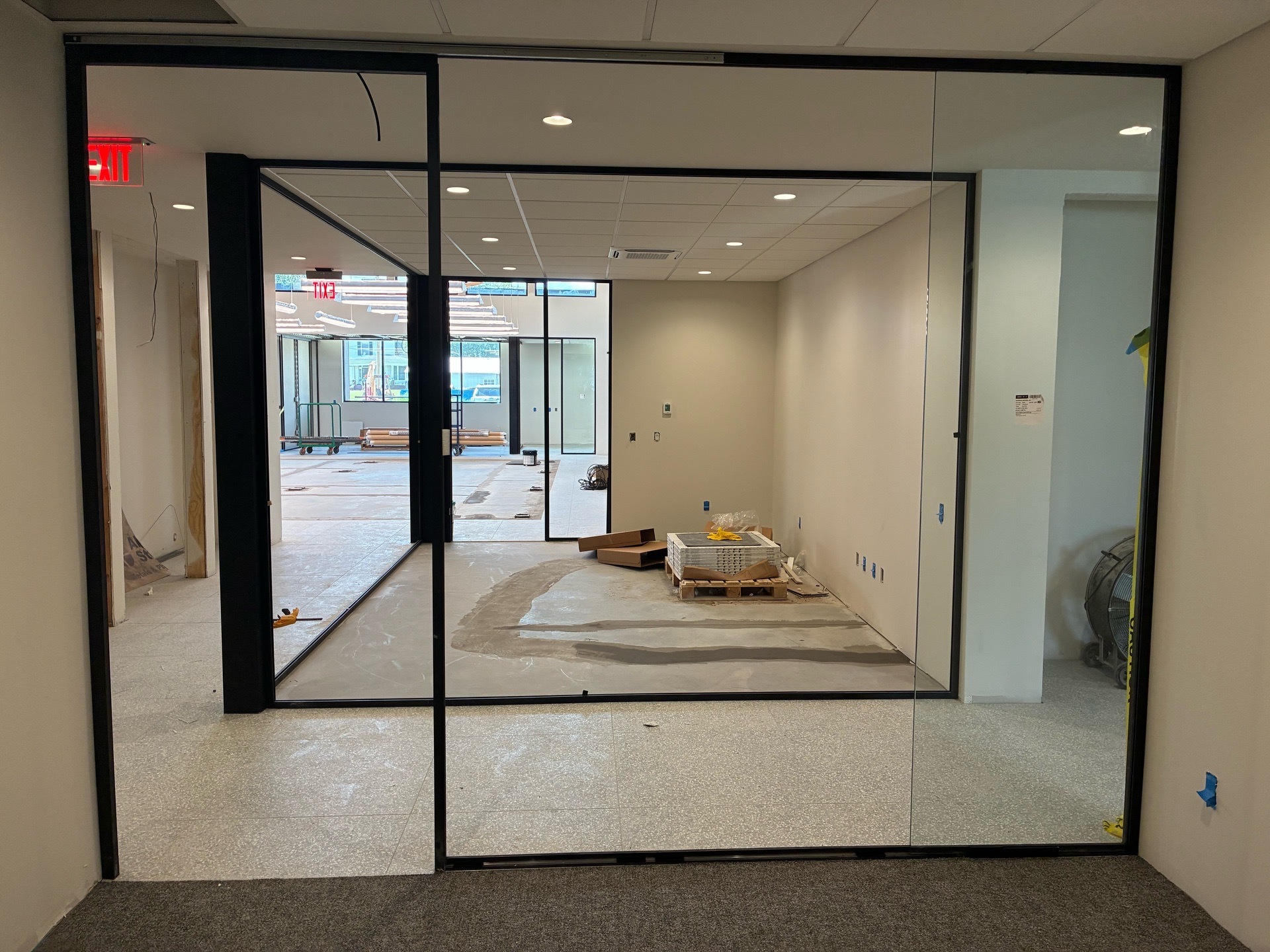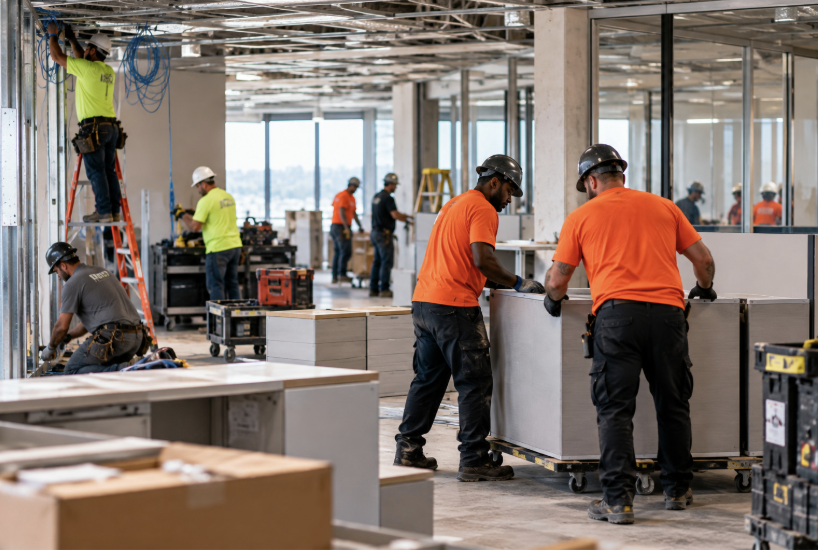
An office build-out takes a team. General contractors, electricians, IT professionals, flooring crews, furniture dealers, and installation teams all have a role to play. The challenge is making sure everyone’s work fits together in the right order.
At RDI, we work alongside these teams on commercial furniture and architectural wall installations. We know how important communication, scheduling, and coordination are to keeping a project moving forward.
Here are five things we’ve learned about coordinating multiple contractors during an office build-out.
1. Plan the Sequence of Work Early
Each phase of an office build-out affects what comes next. Flooring and painting generally need to be completed before furniture installation, while electrical and data work must be coordinated with workstation layouts and other furniture requirements.
We work with project teams to understand where our installation fits into the larger schedule. Bringing us into the conversation early helps everyone identify dependencies and determine when the space will be ready for our crew.
The earlier the project team establishes the sequence of work, the easier it is to coordinate the handoffs between contractors.
2. Keep Everyone Working From the Same Plans
Office layouts and project details can change as a build-out progresses. When those updates aren’t communicated to everyone involved, different teams can end up working from different versions of the plan.
We rely on current layouts, approved drawings, and clear communication to understand what needs to be installed and where. When changes affect furniture placement, architectural walls, power access, or data connections, it’s important that the appropriate teams receive those updates before work proceeds.
Keeping everyone aligned on the latest plans helps us coordinate our work with the rest of the project.
3. Clarify Responsibilities Between Contractors
On a commercial project, some tasks involve multiple trades. Without clear responsibilities, important details can be overlooked or left waiting on another team.
We encourage project teams to clarify responsibilities before installation begins. Who handles existing furniture removal? Who coordinates electrical and data connections? Who is responsible for clearing the work area or managing debris?
When everyone understands their role, it’s easier to coordinate the work and address questions as they arise.
4. Communicate Changes as They Happen
Even a well-planned project can change. Construction schedules shift, materials arrive on different timelines, and site conditions sometimes differ from what was originally expected.
When a change affects our installation, early communication gives us a better opportunity to coordinate with the project team and adjust our plans when possible.
We find that consistent communication between property managers, general contractors, furniture dealers, and installers helps everyone stay informed and make decisions with the full project in mind.
5. Bring Your Installation Partner Into the Conversation Early
Although furniture installation often happens toward the end of a build-out, planning for it should begin much earlier.
Our team needs to understand the scope of work, site conditions, delivery requirements, installation sequence, and any building-specific logistics. Those details can also affect how other contractors schedule and complete their work.
When we are involved early, we can discuss our requirements with the project team, identify coordination needs, and help establish a realistic plan for installation day.
At RDI, we see ourselves as part of the larger project team, not simply the crew that arrives when construction is finished. Working together from the beginning helps us prepare for the job and coordinate our work with everyone involved.
Better Coordination Makes for Better Projects
A successful office build-out depends on more than each contractor completing their individual tasks. The real progress happens when those tasks come together in the right sequence, with clear communication and shared expectations.
We believe the best installation days are built on preparation and partnership. When we coordinate with property managers, general contractors, furniture dealers, and other trades early, our crew can focus on completing the work as planned.
Planning an office build-out? We partner with commercial furniture dealers, general contractors, and property teams to coordinate furniture and architectural wall installations as part of a larger project.
Better Plans. Better Crews. Better Installs.